
Story / Reel still
Recommended1080×1920 9:16
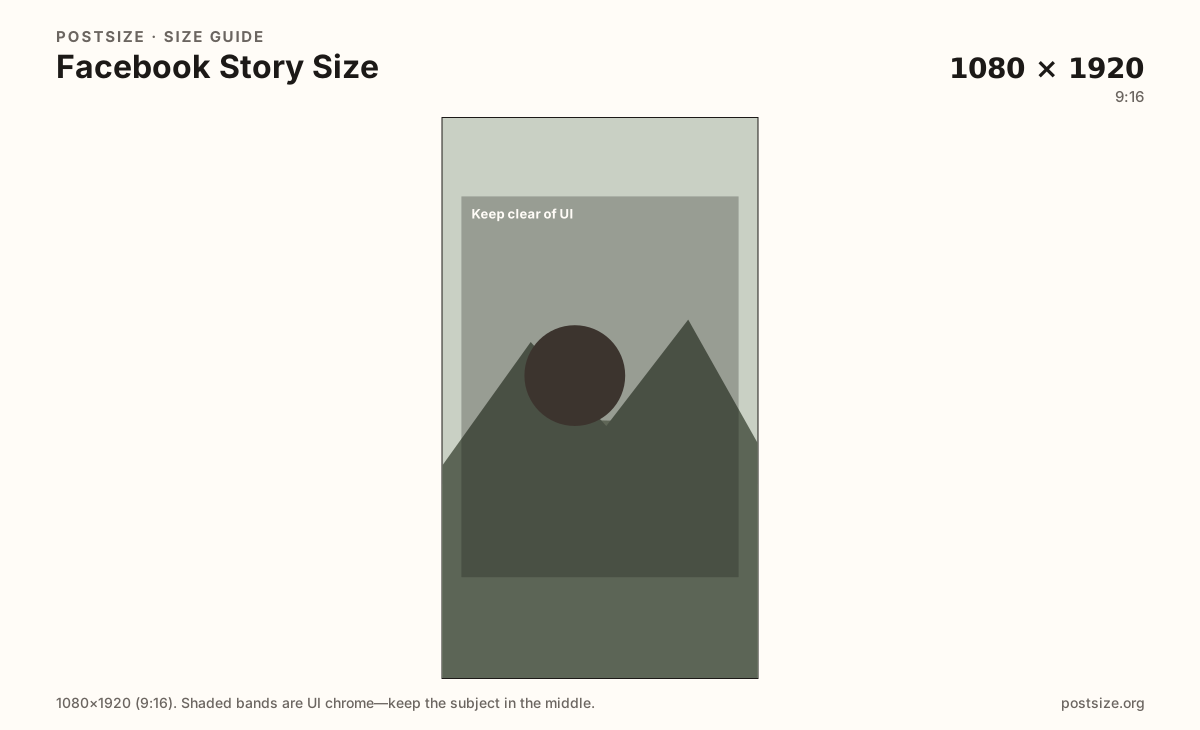
Full-screen vertical. Design inside the safe band; UI chrome covers the edges.
Use in toolFacebook · Image size
Facebook Stories fill the phone screen at 1080×1920. Keep faces and type out of the top and bottom UI bands, then download a clear vertical frame in your browser.
Browser crop · stays on your device
1080 × 1920
Add a photo to crop
Upload a vertical photo—or try the sample—then keep faces and headlines inside the inner guide before download.
Export 1080×1920, but treat the top and bottom strips as unsafe for critical text. Stickers and reply UI can cover more than you expect.
Export this for Facebook upload.
1080×1920 9:16
Full-screen vertical. Design inside the safe band; UI chrome covers the edges.
Use in tool| Asset | Pixels | Ratio | Notes | Action |
|---|---|---|---|---|
| Story / Reel still Recommended | 1080×1920 | 9:16 | Full-screen vertical. Design inside the safe band; UI chrome covers the edges. | Use in tool |
Reference sizes and crops—not always separate upload files.
1080×1420 ~9:12
Conceptual inner area after top/bottom UI. Use the on-canvas margins as the real guide.
Not available in the crop tool
| Asset | Pixels | Ratio | Notes | Action |
|---|---|---|---|---|
| Safe content box (guide) | 1080×1420 | ~9:12 | Conceptual inner area after top/bottom UI. Use the on-canvas margins as the real guide. | — |
A Story is 1080×1920, but viewers never see a clean empty rectangle. Profile chips, progress bars, stickers, reply fields, and swipe-up style actions sit on top of your art.
If you place a headline at the very top or a logo at the very bottom, Facebook’s chrome will cover it on many devices. The red safe guide on this page marks a practical inner band for faces and text.
Stories also disappear quickly and are often watched one-handed. One idea per frame beats a poster full of paragraphs. Save dense offers for a feed post or a follow-up link in the caption where available.
When you repurpose Instagram Stories or Reels stills, double-check Facebook’s placement of stickers and CTAs—layouts are similar, but not identical on every account type.
Same full-screen frame—top and bottom UI chrome cover anything glued to the edges.
Tick these off against your crop preview—nothing is saved.
Similar-looking slots often use different ratios—do not reuse one export for all of them.
1080 × 1920
This page. Full-screen vertical with UI overlays.
1080 × 1350
Shorter portrait for the main feed—not a Story export.
1640 × 624
Wide profile banner—different ratio entirely.
640 × 640
Circular avatar that appears in Story chrome, not the Story art itself.
| Surface | Typical size | Note |
|---|---|---|
| Story frame | 1080 × 1920 | This page. Full-screen vertical with UI overlays. |
| Feed post | 1080 × 1350 | Shorter portrait for the main feed—not a Story export. |
| Cover photo | 1640 × 624 | Wide profile banner—different ratio entirely. |
| Profile photo | 640 × 640 | Circular avatar that appears in Story chrome, not the Story art itself. |
Treat the top band as reserved for progress bars and profile identity, and the bottom band as reserved for replies, music, and sticker stacks. Exact padding varies by device and app version—design with margin, not pixel-perfect assumptions.
Stories are glanceable. One product, one face, or one short line of type is enough. If you need steps, use a sequence of frames instead of cramming a flyer into one still.
Export 1080×1920 in sRGB. JPG is fine for photos; PNG helps for flat graphics. Very heavy files may take longer to upload on mobile data without looking better.
Upload a vertical (or any) photo, lock the Story preset at 1080×1920, then drag until faces and headlines sit inside the inner guide. Download when the unsafe top and bottom bands only contain background.
From this download to a live upload in a few minutes.
Download the 1080×1920 file from the tool.
Open Facebook → Your Story (or Page Story tools if you use them).
Upload, then add stickers only after confirming text is still clear.
Preview once with stickers on—stickers can cover what looked safe.
Publish, then open the Story from another account or device if you can.
1080×1920 pixels (9:16). That fills a typical phone screen, but Facebook UI still covers the top and bottom—keep important content inside the safe band.
Progress bars, profile chips, stickers, and reply fields overlay your image. Move headlines into the middle safe zone and leave the bottom calmer if you will add stickers.
Often yes as a starting point—both are 9:16—but re-check sticker and CTA placement after upload on Facebook.
No. Feed posts are commonly 1080×1350 (4:5). Stories are taller at 1080×1920.
Vertical video often uses the same 9:16 frame. Treat cover stills like Stories: protect the center band from UI.
JPG for photos; PNG for clear logos or type-heavy graphics. Keep sRGB either way.
Keep clips short and check Facebook’s current limits for your account type. Still frames should still follow the same 1080×1920 safe zones.