
Header / banner
Recommended1500×500 3:1
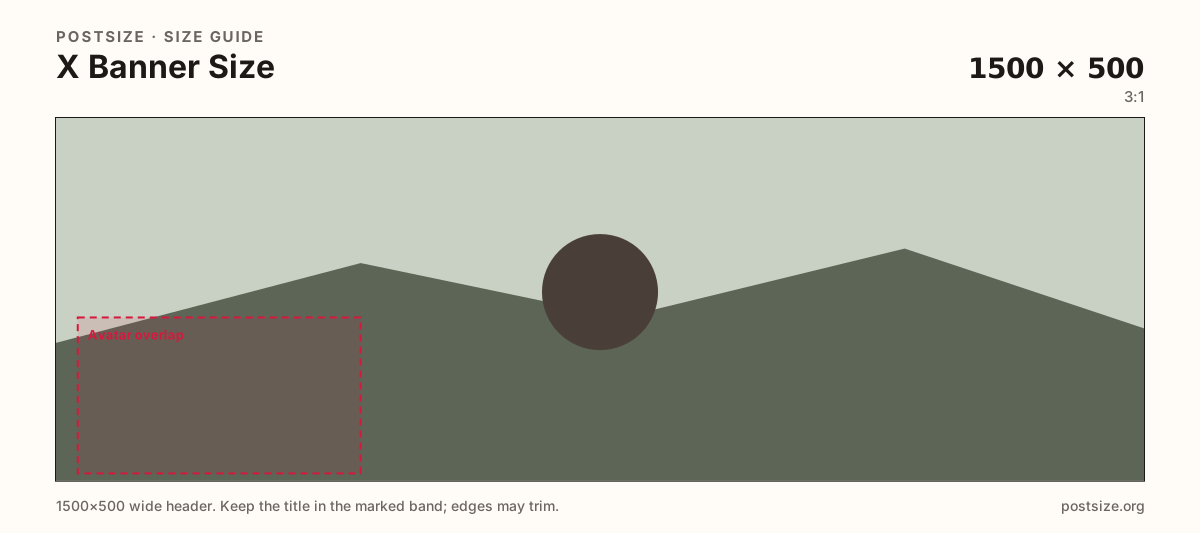
Standard X/Twitter header. One file for every device; phones may trim edges slightly and always overlay the avatar.
Use in toolX (Twitter) · Image size
X headers are a wide 1500×500 strip. Keep faces out of the lower-left avatar overlap, leave edges calm for mobile, then download in your browser.
Browser crop · stays on your device
1500 × 500
Add a photo to crop
Upload a wide photo—or try the sample—then keep faces out of the avatar overlap before you download.
Publish at 1500×500. Leave the lower-left quieter—the circular profile photo sits on top of the banner on every device.
Export this for X (Twitter) upload.
1500×500 3:1
Standard X/Twitter header. One file for every device; phones may trim edges slightly and always overlay the avatar.
Use in tool| Asset | Pixels | Ratio | Notes | Action |
|---|---|---|---|---|
| Header / banner Recommended | 1500×500 | 3:1 | Standard X/Twitter header. One file for every device; phones may trim edges slightly and always overlay the avatar. | Use in tool |
Your X profile shows one header file. Desktop keeps most of the 1500×500 width; phones often tighten the frame and still drop your circular avatar onto the lower-left. A logo that looks perfect in a design file can vanish under the photo or off the short edge.
Correct pixels keep the image clear after compression. The safe zone—quiet lower-left, calm far edges, subject in the open mid/right band—keeps the message readable when someone opens your profile from a notification on a phone.
Creators and brands reuse Facebook covers or LinkedIn banners here all the time. Those ratios are not 3:1. Stretching them makes people look warped and pushes type into the avatar pocket. Re-crop once for X instead of forcing another network’s export.
Treat the header like a billboard behind your face: short headline, clear subject, no tiny captions at the rim. If the only branding sits under where the avatar lands, the profile reads as unfinished even when the upload size is correct.
Same header strip—keep the avatar pocket clear and the subject in the open band.
Tick these off against your crop preview—nothing is saved.
Similar-looking slots often use different ratios—do not reuse one export for all of them.
1500 × 500
This page. Profile header; avatar overlaps the lower-left.
1600 × 900
In-timeline photos—16:9, not a banner substitute.
400 × 400 (try 800×800)
Circle that sits on top of this banner.
~1200 × 628 typical
Shared URL previews only—do not upload as the header.
| Surface | Typical size | Note |
|---|---|---|
| Header banner | 1500 × 500 | This page. Profile header; avatar overlaps the lower-left. |
| Post image | 1600 × 900 | In-timeline photos—16:9, not a banner substitute. |
| Profile photo | 400 × 400 (try 800×800) | Circle that sits on top of this banner. |
| Link card / OG-style | ~1200 × 628 typical | Shared URL previews only—do not upload as the header. |
On the profile page, X draws your circular photo over the lower-left of the header. That pocket is not optional—every viewer sees it. Design as if a solid circle already owns that corner.
Mobile layouts can also trim a little from the left and right of a wide banner. Treat the outer 5–8% as atmospheric only: sky, blur, or soft brand color—not the only logo or a face. Desktop may show more width, but the avatar still lands in the same relative corner.
Photos usually look best as JPG; hard-edged logos or flat type can stay PNG. Prefer sRGB so colors do not shift after upload. Keep the file light enough for mobile networks—headers load on every profile visit.
Facebook covers (~820×312 display / 1640×624 upload) and LinkedIn covers (1584×396) are different ratios. Dropping them into X without a fresh crop stretches faces and pushes type into the avatar zone.
Upload a wide photo (or try the sample), drag until the subject clears the avatar guide, then download. Processing stays in your browser—nothing is uploaded to our servers for cropping.
Upload 1500×500 when the source allows. Lighter same-ratio files can work, but soft upscales look muddy on phones.
On X, header, banner, and cover photo usually mean this same strip—not a timeline post and not a link-preview card. Keep the lower-left quiet for the avatar either way.
From this download to a live upload in a few minutes.
Download the 1500×500 JPG (or PNG for hard-edged graphics) from the tool.
On X, open your profile → Edit profile → edit the header / banner photo.
Upload the file, then nudge the position once in X’s editor if it offers a drag handle.
Save and open the profile on your phone with the avatar visible.
If anything important sits under the circle or off-screen, re-crop here and upload again.
1500×500 pixels (3:1) is the standard header size. Upload that frame, then keep critical content away from the lower-left avatar overlap and the far edges.
Yes. That is the practical header size for the X profile strip. Keep critical content out of the avatar overlap and the far edges.
Your circular profile photo sits on top of that corner on the profile page. Anything important there gets covered for every visitor.
You may see slight edge differences on phones. Keep logos and faces out of the rim and the avatar pocket, then preview on a real device after upload.
Not without re-cropping. Facebook covers use a different ratio (~2.63:1). Stretching them into 1500×500 warps the image and often lands content under the avatar.
Yes—header, banner, and cover photo usually mean the same 1500×500 profile strip. It is not the same as a timeline post image or a link-preview card.
JPG for photographs, PNG for hard-edged logos or flat type. Export sRGB and keep the file reasonably light for mobile networks.
Coordinate colors if you like, but export them as separate files. The avatar is a square circle crop; the banner is a 3:1 strip with its own safe zone.